

Google’s Quiet Search Test Just Shook Zillow — Here’s Why Investors Are Worried
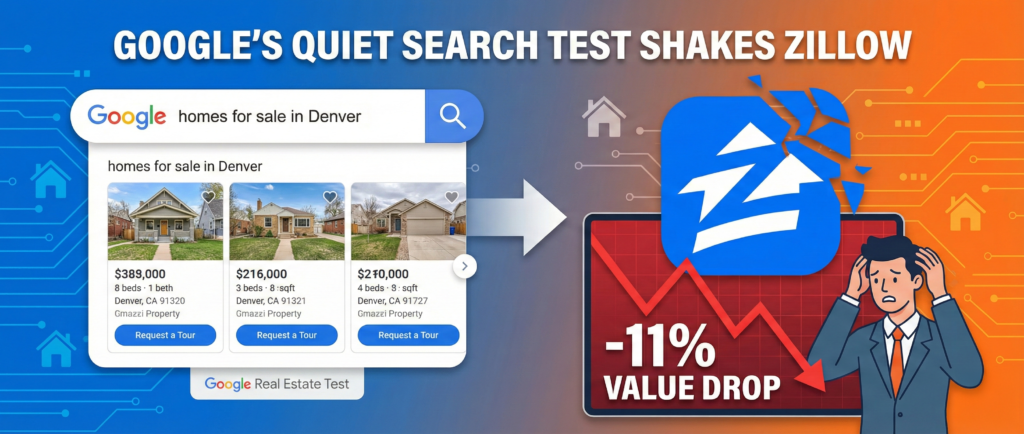
Zillow’s stock just took an 11% hit in a single day a drop worth roughly $1.5 billion in market value. Surprisingly, this wasn’t due to weak earnings, a scandal, or a housing market shift. Instead, it was triggered by an unexpected player making a subtle but powerful move: Google.
Google’s Real Estate Experiment
In select U.S. cities including Denver, Los Angeles, Miami, and Houston, Google has quietly begun testing a new feature that could reshape how people find homes online. Instead of showing users a list of links to websites like Zillow, Redfin, or Realtor.com, Google now displays actual property listings directly within the search results.
These preview cards include photos, prices, and even a “Request a Tour” button, all without requiring users to click through to another website. What makes this more than just a visual upgrade is where the data comes from. Google isn’t scraping listings from Zillow or aggregating random results. It’s partnering with MLS-backed data providers like HouseCanary, ensuring the listings are official and up-to-date.
Why Zillow Investors Are Panicking
Zillow’s core business model is built on traffic, specifically, the millions of users who find homes through Google Search. That visibility drives advertising revenue, referral traffic, and lead generation for agents and mortgage partners.
If Google begins to own the “front door” of real estate search, those clicks to Zillow could drop significantly. Even if the current pilot is limited, investors are pricing in the risk of what it could become and the potential for Google to bypass these platforms entirely.
A Glimpse at the Future of Home Search
The implications extend beyond Zillow. If Google scales this test nationwide, it could change how the entire online real estate ecosystem works. Listing portals, brokerages, and lead generation firms all rely heavily on search-driven discovery. By embedding listings natively into search results, Google could position itself at the very start and possibly even the end of the home-buying journey.
For now, this remains a controlled experiment in just a few markets. But the market’s reaction shows investors aren’t waiting for Google to confirm its full intentions. They’re bracing for a world where buyers might never need to leave Google Search to find or even tour their next home.
Disclaimer: The information provided in this article is based on published research, real estate industry practices, and scientific studies current as of the publication date. However, this content is for educational and informational purposes only and does not constitute professional real estate, medical, or scientific advice. The studies referenced (including the Australian realestate.com.au experiment and University of Colorado research) represent findings at the time of their publication and may not apply universally to all properties, markets, or individuals. Results vary based on location, market conditions, property type, and buyer demographics.
Disclaimer: The information provided in this blog is for general informational purposes only and should not be taken as professional advice. While every effort is made to ensure accuracy, no guarantee is given regarding the completeness or reliability of the information. Readers should conduct their own research or consult qualified professionals before making any financial, legal, or personal decisions. The views expressed are personal opinions and do not necessarily reflect those of any affiliated organizations.

