

How Proposition 13 Froze California’s Housing Market
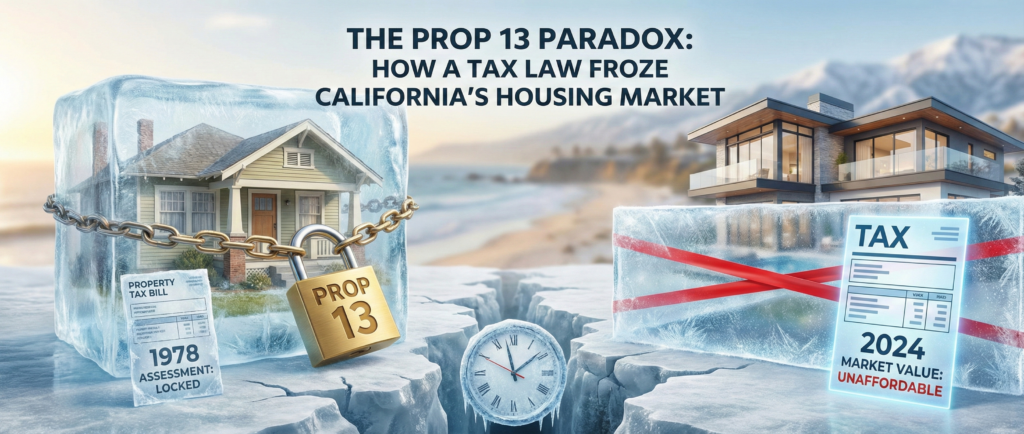
When Californians voted for Proposition 13 back in 1978, the goal seemed simple: protect homeowners from runaway property taxes. Home values were skyrocketing so quickly that many long‑time residents, particularly retirees, feared they’d be taxed out of their homes. Prop 13 offered them stability, but decades later, it may be one of the biggest reasons only 16% of Californians can afford a median‑priced home.
What Prop 13 Does
Under Proposition 13, property taxes are tied to the purchase price of a home, not its current market value. The law caps the tax rate at 1% of that original price and limits annual increases in the assessed value to just 2%, no matter how much the property actually appreciates in the real market.
This means a homeowner who bought a house in 1980 for $100,000 pays taxes based on a value that has only crept up slightly over the decades. Even if that home is now worth over $1 million, their tax bill remains suppressed. However, when that same homeowner sells, the buyer’s tax bill resets to the new, far higher market price.
The Lock‑In Effect
This built‑in difference creates what economists call the “lock‑in effect.” Because selling means losing that low tax rate and facing a massive tax hike on a new property, many homeowners choose to stay put for decades, even when they’d prefer to downsize or move.
This effectively shrinks the housing supply. Fewer people list their homes, which means fewer opportunities for younger or first‑time buyers to enter the market. The result is a system designed to protect stability that inadvertently reinforces scarcity.
Tax Inequality Between Neighbors
Prop 13 also produces striking tax disparities. Two households on the same block may live in identical homes but pay wildly different taxes depending on when they purchased.
Here is a realistic breakdown of how that math looks today:
| Year of Purchase | Current Market Value | Approx. Annual Property Tax |
| 1980 | $1,000,000 | ~$2,400 (Assessed value grows slowly) |
| 2024 | $1,000,000 | ~$10,000 (Assessed at full market value) |
A well‑known example often cited is Warren Buffett, who once noted he paid less property tax on his multi‑million‑dollar California residence than on his much smaller home in Nebraska. That’s because Nebraska reassesses property at current market value annually, while California effectively freezes assessments in time.
How Cities Lost the Incentive to Build
This system doesn’t just affect homeowners, it creates a perverse incentive for city planning.
Because property tax revenue from housing is low and capped, new homes often cost a city more in services (schools, roads, utilities) than they generate in tax revenue. As a result, local governments prioritize commercial developments like shopping centers and car dealerships, which generate lucrative sales tax revenue with fewer service demands. This “fiscalization of land use” means cities often approve retail over residential, widening the housing shortage year after year.
A Well‑Intentioned Legacy with Unintended Consequences
Proposition 13 succeeded in preventing homeowners from being priced out by taxes. But by freezing tax values, it also frozen mobility across the state. The policy created a generation of homeowners who can afford to stay, while leaving others permanently locked out.
Today, with home prices at record highs and affordability near record lows, California faces a policy paradox: a law that once empowered families to keep their homes now keeps new families from getting one at all.
Disclaimer: The information provided in this blog is for general informational purposes only and should not be taken as professional advice. While every effort is made to ensure accuracy, no guarantee is given regarding the completeness or reliability of the information. Readers should conduct their own research or consult qualified professionals before making any financial, legal, or personal decisions. The views expressed are personal opinions and do not necessarily reflect those of any affiliated organizations.

