

Tech Layoffs Are Real, But Bay Area Rents Are Still Surging – Here’s Why
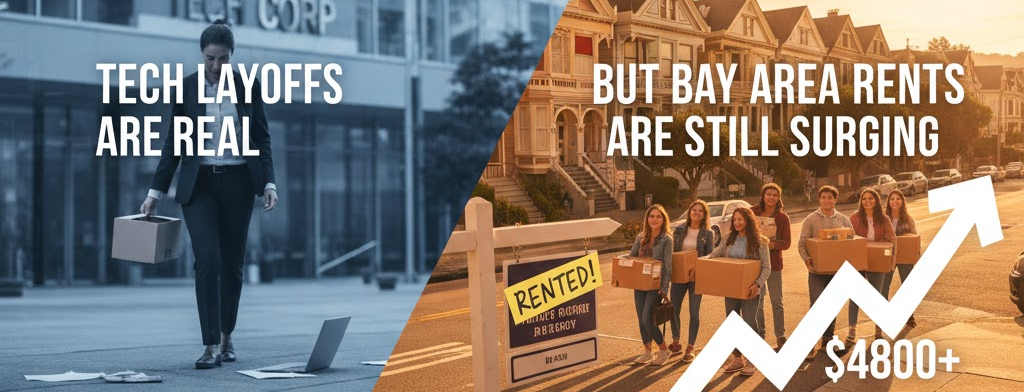
The tech layoff headlines in early 2026 sound dramatic, but the data tells a more nuanced story about jobs, housing, and rents, especially in the Bay Area.
Amazon and the new layoff wave
In October 2025, Amazon announced about 14,000 corporate job cuts as part of a push to streamline and redirect spending into AI and other “big bets.” In January 2026 it followed with another 16,000 corporate layoffs globally, completing a plan to trim around 30,000 white‑collar roles since late 2025. Across the tech sector, trackers and news outlets estimate that tens of thousands of workers lost jobs in 2025 and that layoff announcements in 2026 are continuing, but at a far smaller scale than the post‑pandemic correction in 2022–23.
On its face, that sounds like it should slam demand for expensive coastal housing markets. The reality is more complicated.

Why the Bay Area housing market is not collapsing
Even as big firms cut staff, San Francisco is experiencing an AI‑driven rental surge. Two‑bedroom units hit a median asking rent of about $5,010 in February 2026, up roughly 19% year‑over‑year, while one‑bedrooms climbed more than 16% to around $3,670. Earlier analyses documented that AI companies and high‑paying tech employers have clustered in the city itself, offering large salaries and sometimes housing perks that allow new hires to absorb rising rents.
This demand lands on top of a severe supply problem. New apartment supply in San Francisco grew only about 1.4% in 2025, lagging the national average, while the city added an estimated 18,000 high‑income tech jobs, many tied to AI and machine learning. The result is intense competition for rentals, bidding wars for desirable units, and renewed upward pressure on prices despite concurrent layoffs elsewhere in the industry.
What layoffs really change
The current wave of layoffs does matter, especially for individual households, for high‑end rentals around specific campuses, and for sellers in neighborhoods tied to companies that are shrinking rather than hiring. But at a macro level, 30,000 or even 100,000 lost tech jobs are small compared with the overall U.S. workforce and with the powerful forces of AI hiring, return‑to‑office mandates, and chronic under‑building.
In the Bay Area, that means layoffs are mostly shaving off some froth at the top of the market rather than causing a broad decline. For now, the balance of evidence points to a housing landscape where AI‑fueled demand and limited supply outweigh the cooling effect of tech job cuts, keeping rents and prices elevated, especially in San Francisco and key tech corridors.
Disclaimer: This content is for informational and educational purposes only and does not constitute legal, financial, or professional advice. While we strive for accuracy, all facts are based on publicly available data and reported events at the time of publication and are subject to change as new information emerges. Because property laws and real estate regulations vary significantly by jurisdiction, you should consult a qualified attorney or local expert for personalized guidance. Use of this information is at your own risk.

